Does your organization need to assess clinical providers’ bilingual medical language proficiency in Spanish or in a language other than English?
REACH is here to help!
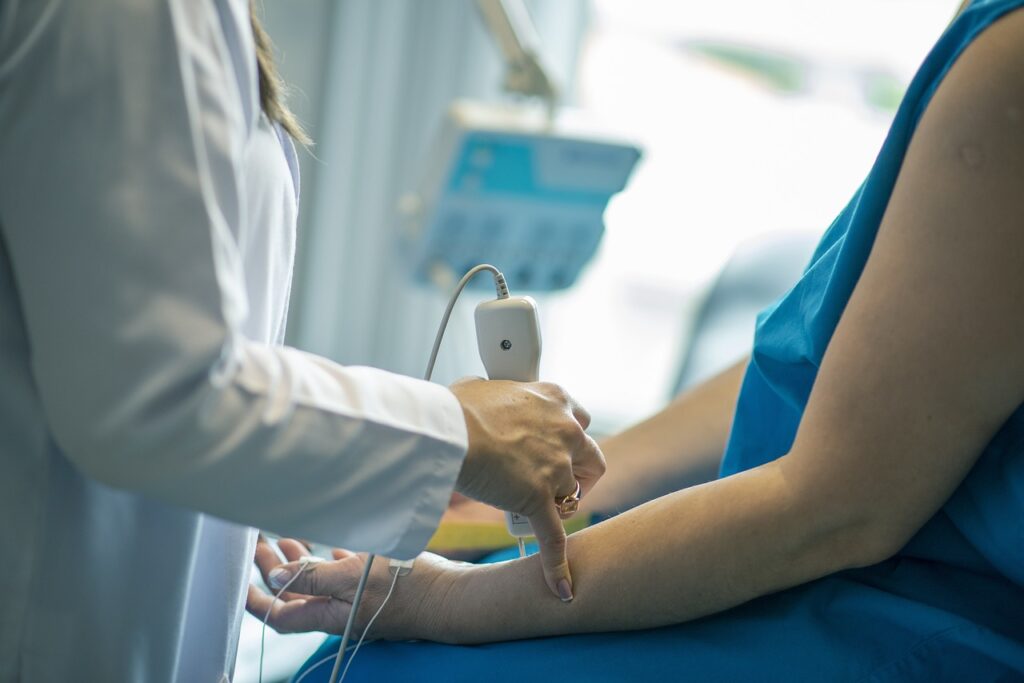
Our assessment aims to measure healthcare providers’ bilingual ability to speak directly to patients with Limited English Proficiency (LEP) in a language other than English.
Effective communication is essential to safe, high-quality, patient-centered healthcare. When healthcare providers communicate directly with patients who have Limited English Proficiency (LEP) in a language other than English, they must be able to convey medical information accurately, clearly, and appropriately. REACH offers specialized bilingual medical language proficiency assessments designed to help hospitals, clinics, and other healthcare and mental health organizations evaluate the ability of physicians, nurses, and allied health professionals to communicate medical information effectively in languages other than English.
Our assessments measure a provider’s bilingual medical language proficiency and ability to communicate directly with patients without relying on an interpreter. This includes explaining symptoms, asking relevant questions, discussing medical histories, communicating screening and assessment results, explaining diagnoses, and describing treatment options in language patients can understand. Evaluating these skills helps organizations determine whether bilingual healthcare professionals possess the medical language proficiency needed to communicate effectively with patients in their non-English language.
REACH has developed an in-house assessment tool specifically designed to evaluate bilingual medical language proficiency in healthcare contexts. Unlike general language proficiency assessments, our approach focuses on the specialized vocabulary, clinical terminology, and communication demands healthcare providers encounter in their professional practice. General conversational fluency does not necessarily demonstrate the ability to discuss complex medical concepts, accurately use specialized terminology, or communicate sensitive health information. A targeted assessment helps organizations better understand a provider’s strengths in medical language proficiency and identify areas where additional language development may be beneficial.
Our assessments are designed for hospitals, clinics, behavioral health providers, and other healthcare and mental health organizations that employ bilingual professionals. They may be useful when evaluating candidates during recruitment, reviewing the language skills of current employees, or determining whether additional training is appropriate before assigning bilingual communication responsibilities. By obtaining a structured evaluation of a provider’s bilingual medical language proficiency, organizations can make better-informed decisions about professional development and the appropriate use of bilingual staff in patient care.
REACH relies on highly experienced linguists who have received training in multiple medical subject areas and understand the linguistic demands of healthcare communication. These professionals assess a provider’s ability to use medical terminology and communicate clinical information accurately in the target language. The assessment process is intended to identify potential language-related limitations that may affect patient communication, particularly when discussing symptoms, explaining procedures, reviewing treatment recommendations, or addressing other important healthcare matters.
Assessment findings provide organizations with useful information about a provider’s bilingual medical language proficiency and potential areas for improvement. Results may help guide decisions about additional language training, professional development, or further evaluation, depending on the organization’s requirements and the responsibilities associated with the provider’s role. REACH’s assessments are designed as an informative evaluation tool rather than a substitute for clinical credentialing, competency reviews, or broader patient safety procedures.
It is important to recognize that bilingual medical language proficiency and professional interpreting competence are distinct skill sets. A healthcare provider who communicates directly with patients in another language does not necessarily have the training required to serve as a professional medical interpreter. Similarly, everyday conversational fluency does not automatically establish the ability to communicate complex medical information accurately. Organizations should consider their language access policies, applicable requirements, and patients’ communication needs when determining how language services should be provided.
At REACH, we understand the importance of evaluating language skills in the context in which they will be used. Our bilingual medical language proficiency assessments help healthcare and mental health organizations gain a clearer understanding of their bilingual providers’ abilities and identify opportunities to strengthen patient communication. Contact REACH to learn how our assessment services can support your organization’s bilingual staffing decisions, professional development initiatives, and commitment to effective communication with patients who have Limited English Proficiency.
We are proud to assess Bilingual Medical Language Proficiency in the following languages:
English – Mandarin – Chinese – Cantonese Chinese – Burmese – Hmong- Nepali – Cambodian – Armenian – Punjabi – Hindi – Urdu – Tagalog – Korean – Arabic – Somali – Russian – Haitian Creole – French – Italian – Portuguese – Polish – Croatian – Serbian – Spanish – Mixteco Alto – Mixteco Bajo – Mam – Tamil – Vietnamese – Indonesian
Interested in learning more about our assessments or availability in a specific language? Contact us at: Assessment@reach-diversity.com
Cancellations made less than 24 hours before a confirmed scheduled assessment, as well as missed appointments (no-shows), are non-refundable.